
SPACEWAN means a wide-area network for space — a network that carries the road to the stars to everyone's fingertips. We believe space exploration is humanity's shared endeavor.
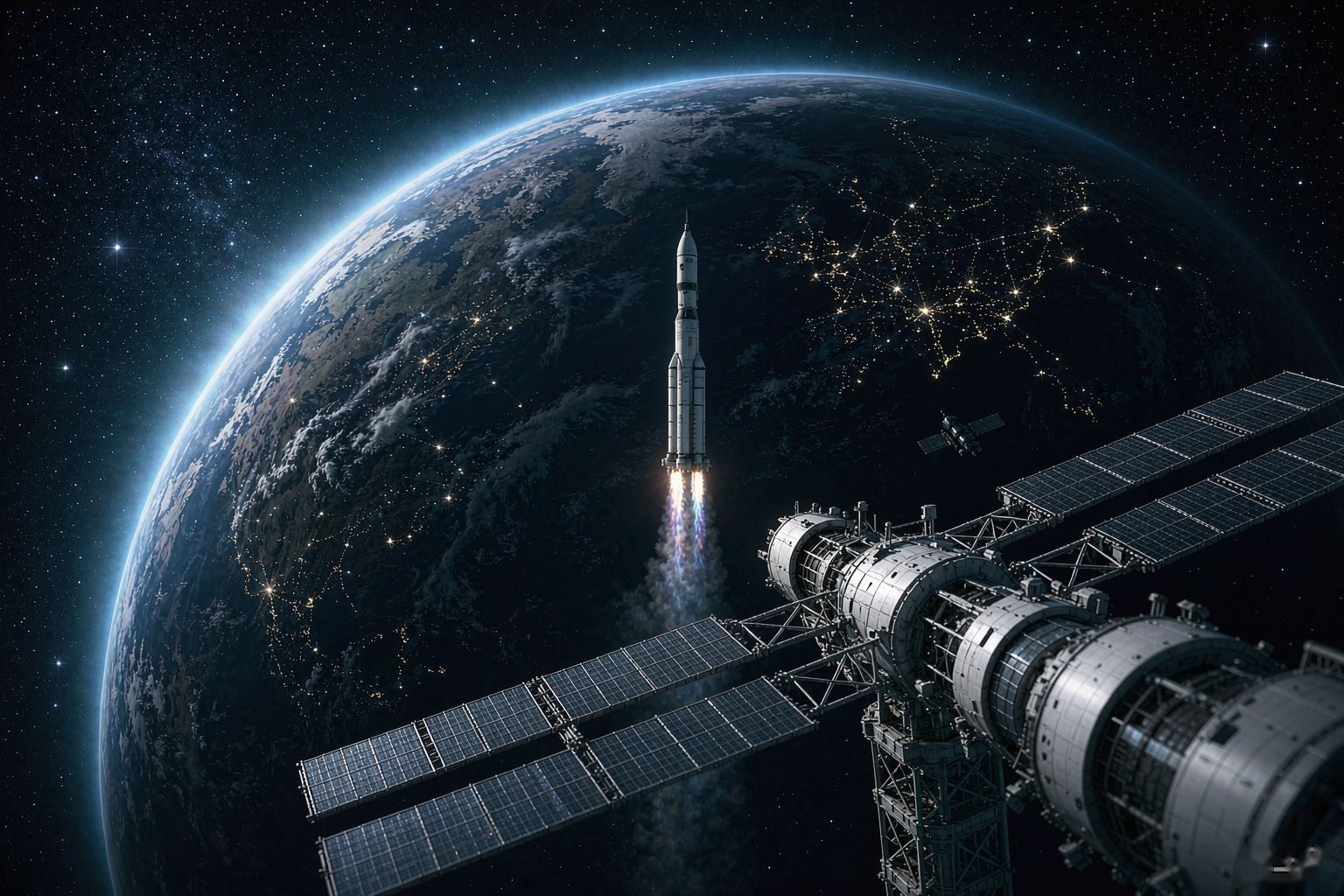
Fifty years ago, the first photograph of the whole Earth from the Moon awakened a generation's sense of stewardship and global citizenship. SPACEWAN wants to do the same today: help people see Earth and the universe again, and believe that humanity deserves a multi-planet future. Our vision: within this century, space will no longer be the profession of the few or the project of a few nations, but part of education, part of culture, part of everyday life.
Science first. Everything we publish aims for accuracy, cites sources, and welcomes corrections. The scientific spirit matters more than scientific trivia — we encourage doubt, verification, and curiosity.
Open by default. Knowledge should have no walls. SPACEWAN content may be freely reproduced non-commercially; educational materials are provided free to rural schools and nonprofits.
Future-facing, Earth-rooted. Exploring space is not escaping Earth — it is understanding and protecting it more deeply. Every study of a Martian dust storm sharpens our models of our own climate.
Dear friend, thank you for reading this far. Here is something simple: space is not far away. The oxygen you breathe was forged in stellar cores; the gold in your jewelry came from colliding neutron stars; the satellites guiding your navigation are artificial stars overhead right now. You are not a spectator of the universe — you are the way the universe comes to know itself.
You don't have to become an astronaut or an engineer to be part of this: read a page of astronomy, watch a launch, teach a child to find the Big Dipper, turn off one lamp during a meteor shower. The road to deep space is paved with millions of such moments. Five hundred years ago we measured oceans with sails; fifty years ago we measured the Earth–Moon distance with rockets; who owns the next five hundred years depends on how many of us look up today.
SPACEWAN will be here — from your first star onward.
Eight content sections covering history, technology, the future, and the universe.
Community forum and "Sky Classroom" public courses; school volunteer program begins.
Localized exoplanet classification and meteor monitoring projects.
Public observing points in 100 cities with museums and clubs.
Partnerships, contributions, volunteering — or just a chat about the stars: hello@spacewan.com
