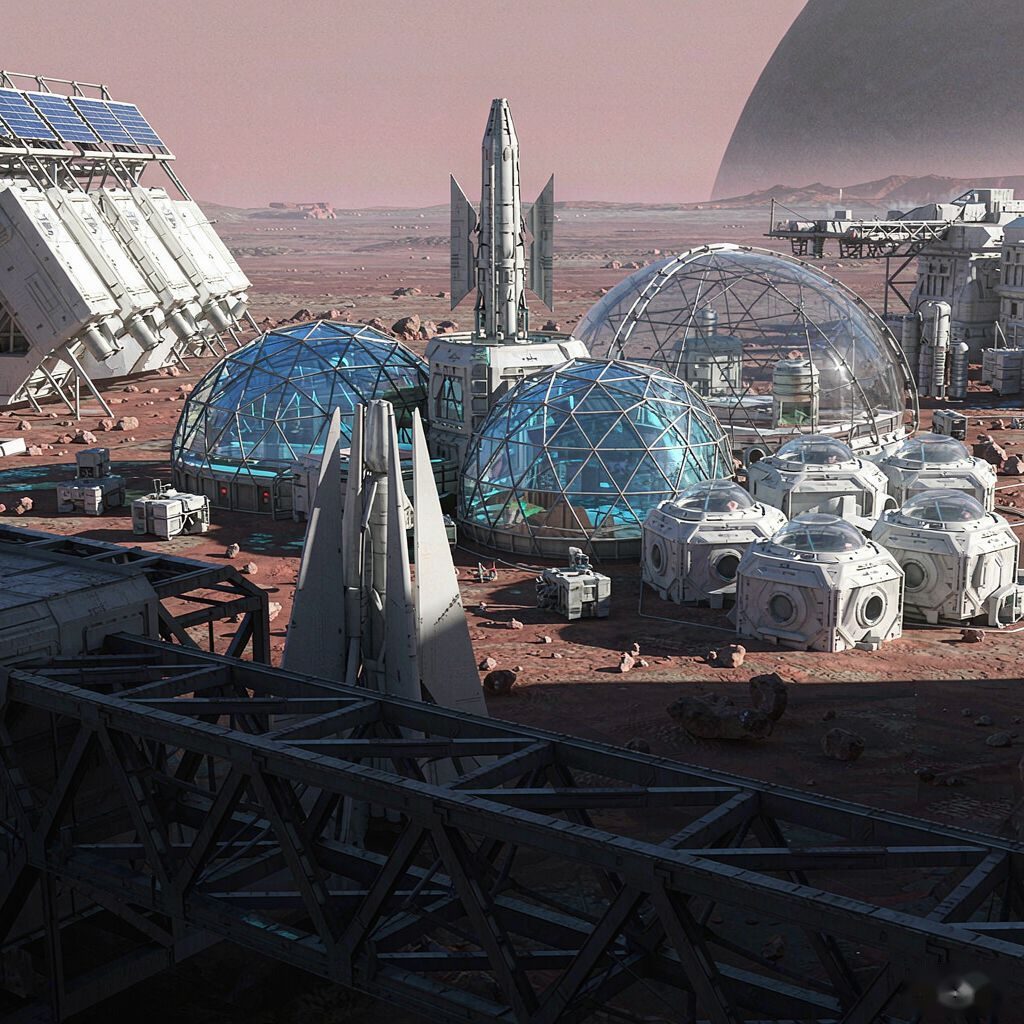
We stand at the threshold of a new era: within thirty years humans may live permanently on the Moon, walk on Mars, mine asteroids, and build cities in orbit. This is not science fiction — it is happening on drawing boards and test stands today.
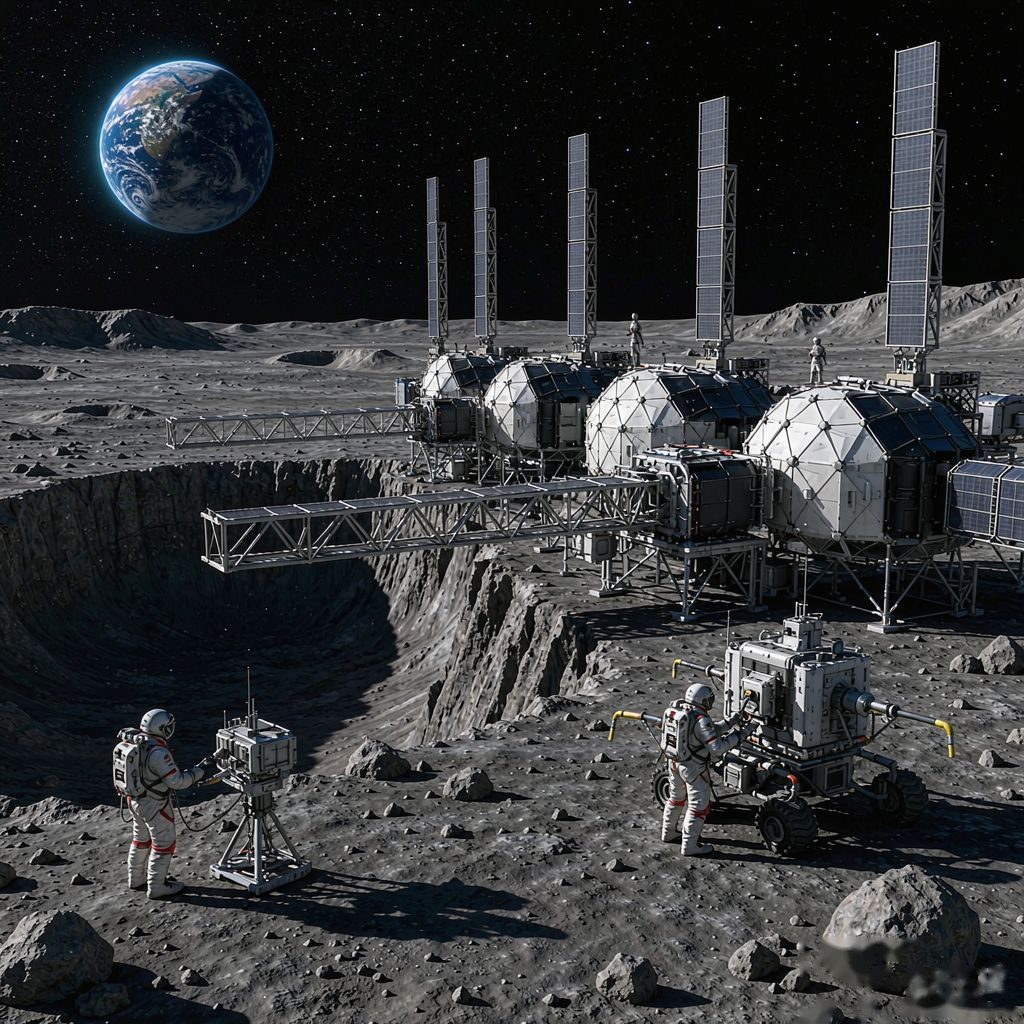
No human has walked on the Moon since 1972. But this time we are going not to "arrive" — we are going to "stay." NASA's Artemis program will return astronauts to the surface and build a lasting presence in orbit and on the ground; China's International Lunar Research Station (ILRS) targets the lunar south pole, where crater floors have not seen sunlight for billions of years — and hold deposits of water ice. Water means drinking, farming, and, once electrolyzed, hydrogen-oxygen rocket propellant. Master lunar ice, and you hold the gas station of the solar system.
The Moon holds another treasure: helium-3, deposited by the solar wind over eons and scarce on Earth — a potential fuel for future fusion reactors. And lunar regolith itself can be 3D-printed into habitat bricks. In-situ resource utilization (ISRU) is the key step from "visiting space" to "living in space."
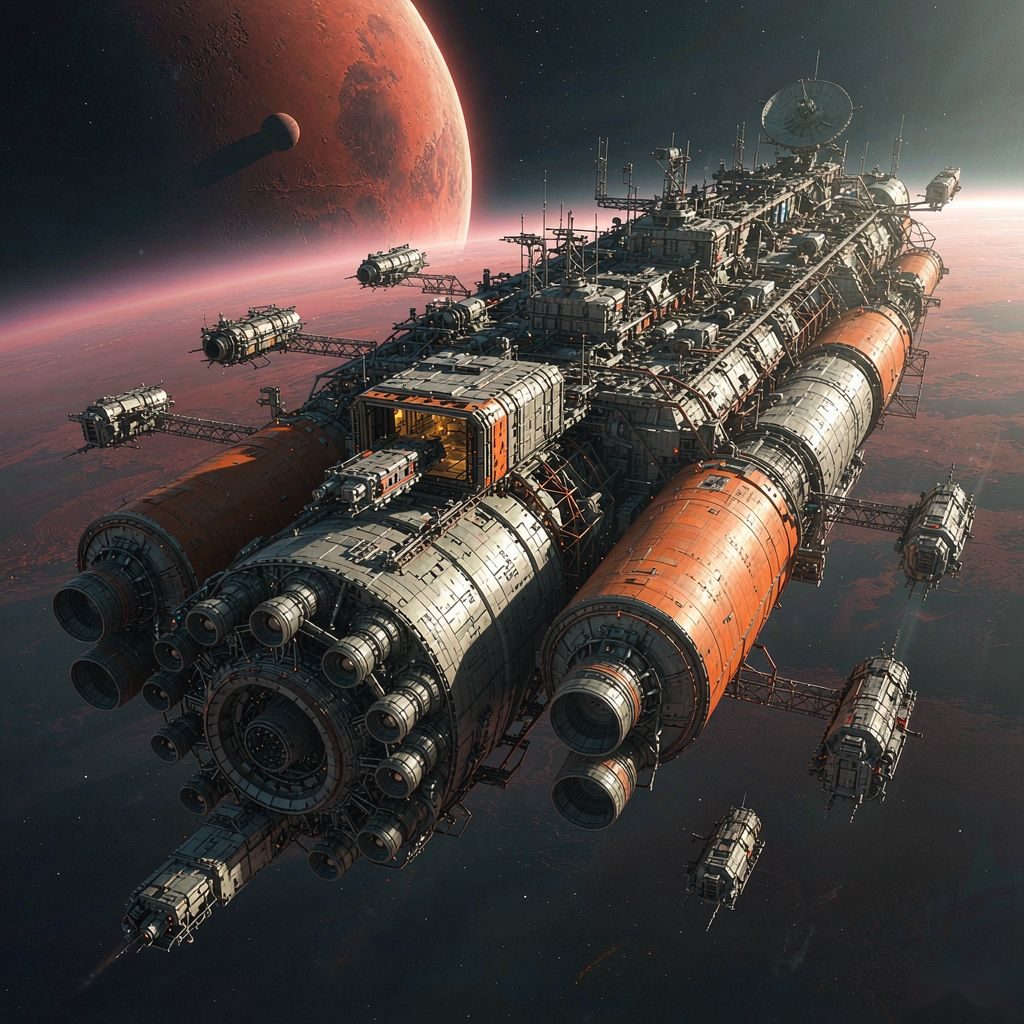
Mars is the most Earth-like planet in the solar system: a 24.6-hour day, seasons, polar ice caps, and ancient rivers, lakes, and perhaps seas. The settlement vision rests on a few pillars: fully reusable heavy starships carrying dozens of people and a hundred tons of cargo; orbital refueling for the round trip; closed-loop life support; and in-situ propellant production on Mars — oxygen from atmospheric CO₂, methane from hydrogen brought or found locally.
Real life on Mars will be demanding: an atmosphere under 1% of Earth's pressure and mostly CO₂, dust storms that can last months, and cosmic radiation that forces habitats underground or beneath meters of regolith and water. Early settlers will be planetary analogs of Antarctic winter-over crews — resupplied from Earth, mapping geology, biology, and resources. As greenhouses, workshops, and power grids grow, a self-sufficient branch of civilization becomes plausible. And every step matters here on Earth too: a second world with humans in it is a civilizational insurance policy against catastrophe.
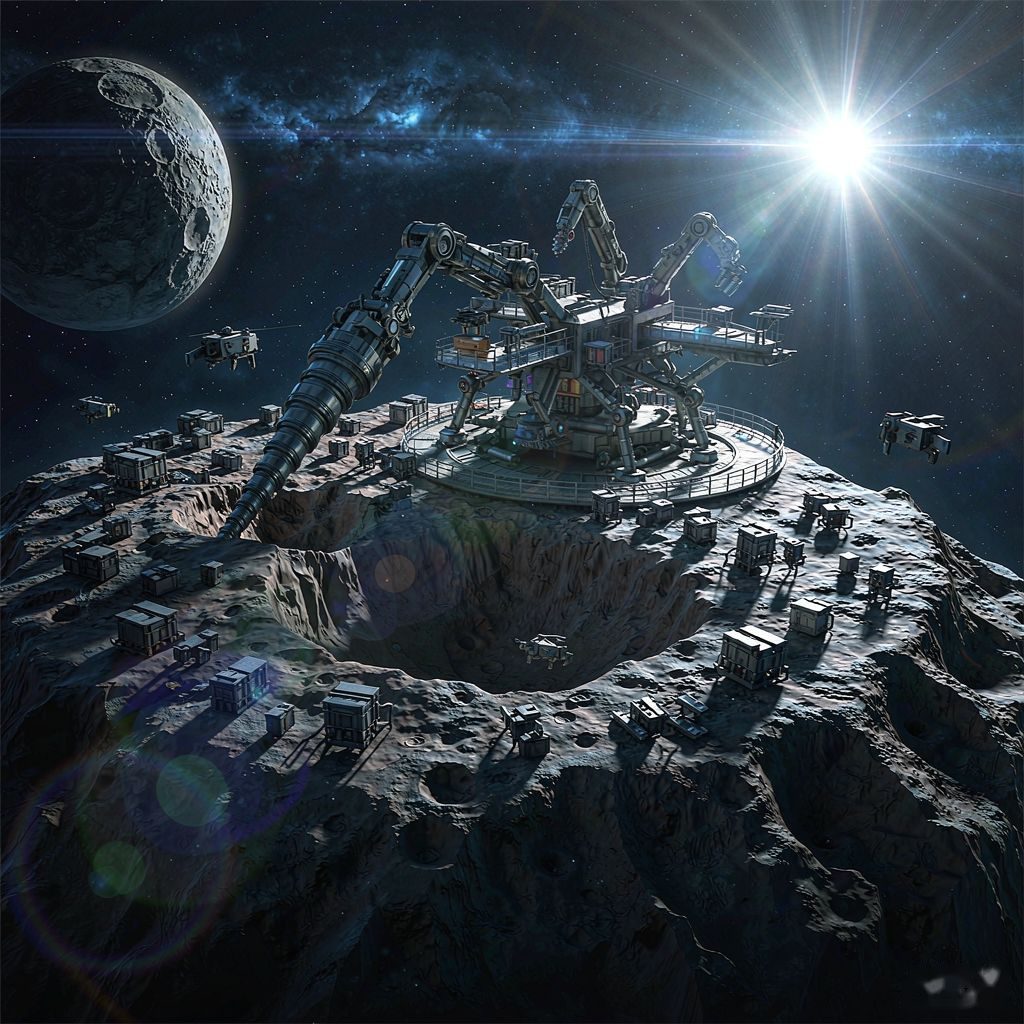
Many asteroids are pristine leftovers from the solar system's birth, rich in metal. A single 500-meter metallic asteroid may hold more platinum-group metals than humanity has ever mined; carbonaceous asteroids carry water and organics ideal for deep-space depots. Mining in space also sidesteps Earth's gravity — from a milligravity rock, departing costs almost nothing.
The path is already traced: flybys and sample returns (Hayabusa and Hayabusa2, OSIRIS-REx) have succeeded; anchoring, drilling, and refining come next. The smartest model is "consume in place" — turning asteroid material into structures and propellant for orbital factories. Solar power satellites, orbital manufacturing, and deep-space fleets may all be fed by these flying mines.
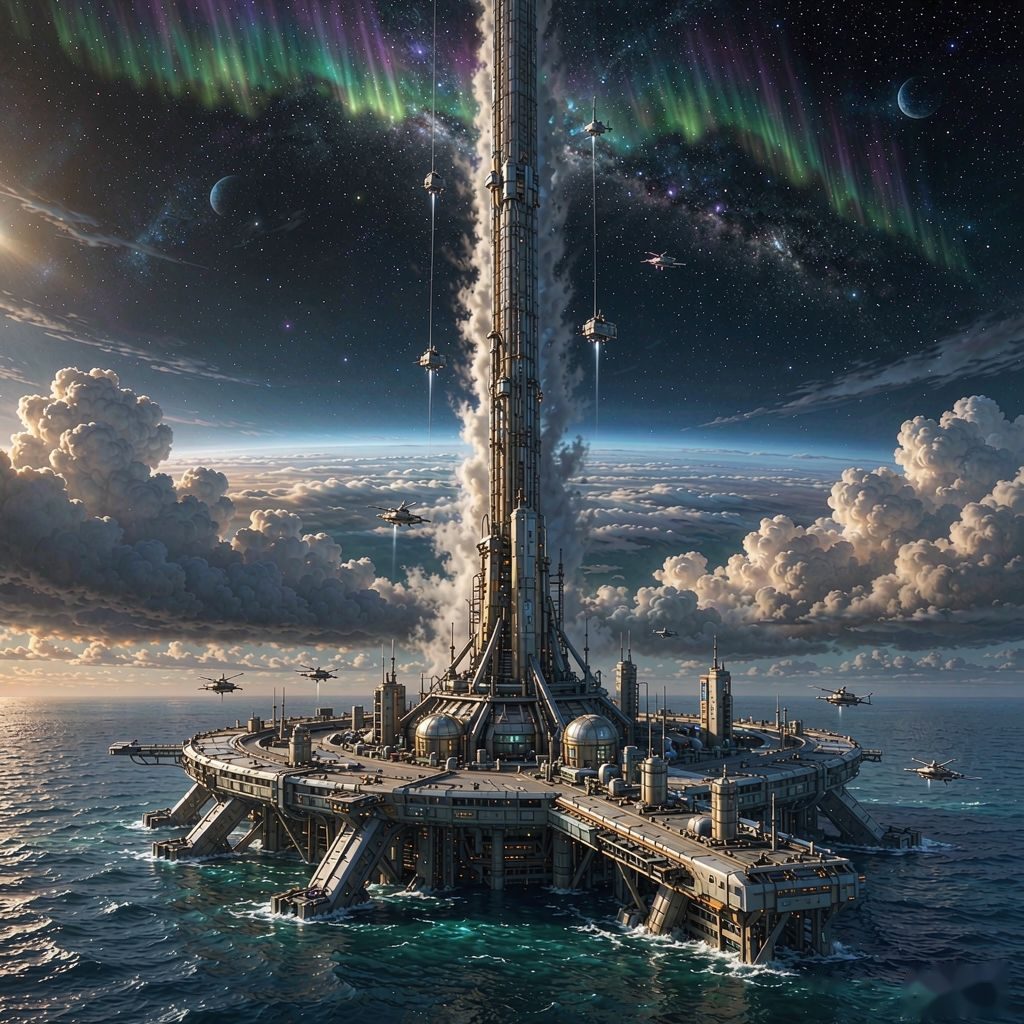
Chemical rockets have a physical price floor. A space elevator would bypass it entirely: a cable roughly 100,000 km long, anchored at the equator and stretched taut between gravity and centrifugal force, with electric climbers riding to orbit. On paper, cargo costs fall a hundredfold.
One problem blocks it: materials. The tether must bear its own enormous weight — tens of times stronger than the best carbon fiber, in the range promised by carbon nanotubes and graphene but not yet manufacturable in flawless meter-scale lengths. Vibration control, debris shielding, and power delivery round out the challenge list. Perhaps in a few decades, "taking the elevator to orbit" will feel as ordinary as a high-speed train.
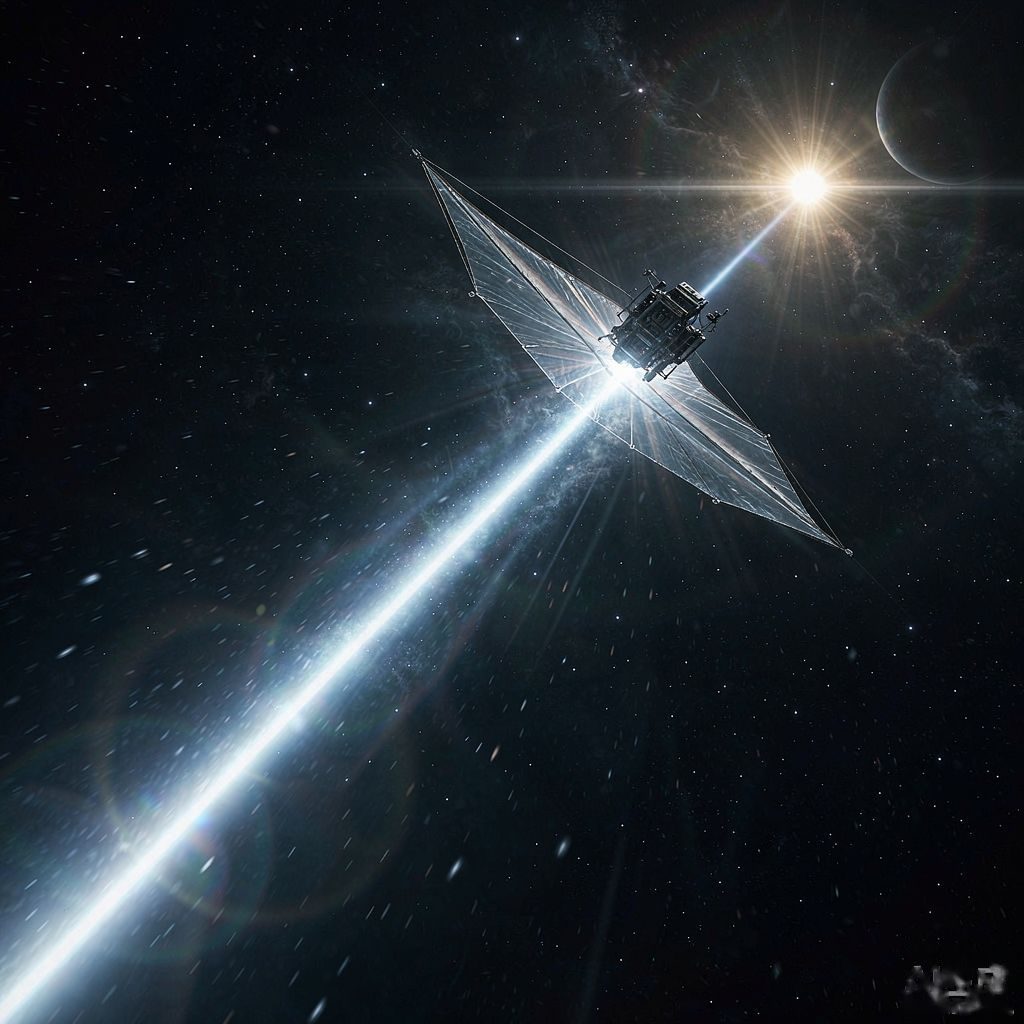
Voyager needed forty years just to leave the solar system; at that speed the nearest star is seventy millennia away. To cross interstellar space within a human lifetime demands new physics of engineering. Breakthrough Starshot proposes ground-based laser arrays pushing gram-scale light sails to 20% of light speed — arriving at Proxima in about twenty years. The sail must be feather-light, stronger than steel, and nearly perfectly reflective: a dual limit of nanomaterials and directed energy. Fusion and nuclear-pulse concepts look "heavy but honest" by comparison — and might power humanity's first true starship.
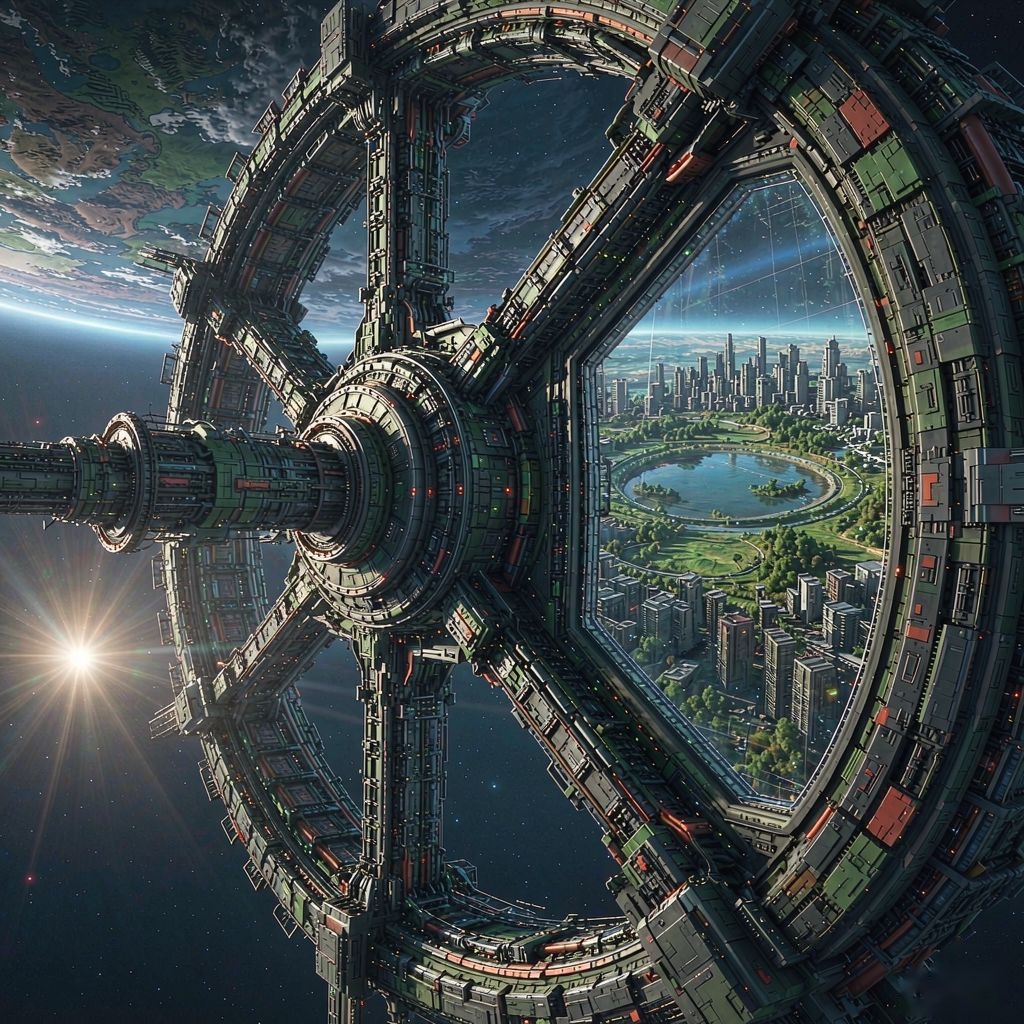
Orbit may hold places more livable than planets. The O'Neill cylinder and rotating ring concepts spin giant sealed volumes to produce comfortable artificial gravity; their interiors hold lakes, forests, and cities under reflected sunlight. A ring a few kilometers across could house hundreds of thousands, with its own farms, industry, and ecology. Building material need not come from Earth — the Moon and asteroids supply it, and electromagnetic launchers can toss lunar mass into orbit cheaply. Solar power satellites, orbital data centers, and tourism will be the first industries of these city-states.

Terraforming is the ultimate question of space exploration: could Mars be made warm and wet again? Concepts include releasing frozen CO₂ through impacts or super-greenhouse gases, melting polar and subterranean ice into seas, seeding hardy microbes to fix carbon, and — eventually — building a breathable atmosphere. As sketched today it is a thousand-year project; but every foundational science behind it (climate control, closed ecosystems, planetary protection) is being advanced in laboratories now. And in learning to warm another world responsibly, we learn to care better for our own.
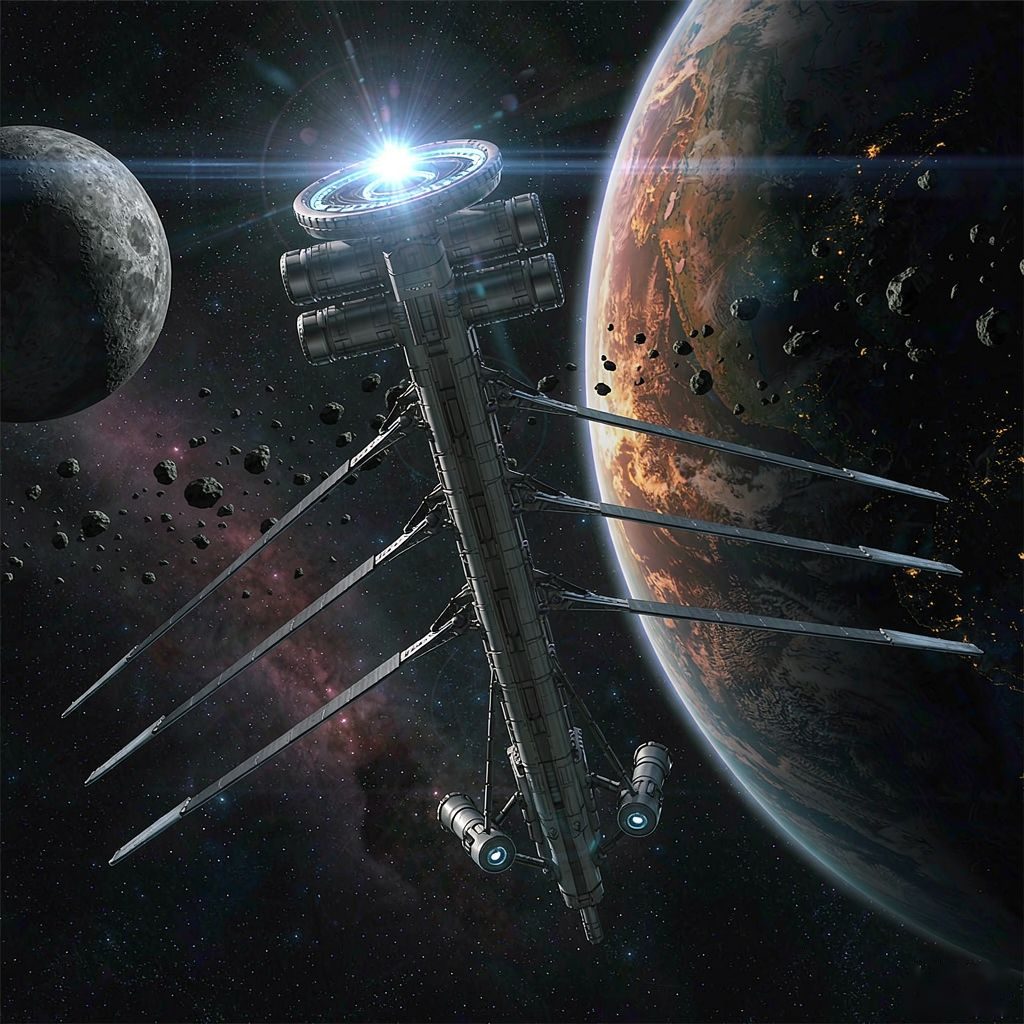
Chemistry caps rocket speed. Nuclear-thermal engines heat liquid hydrogen to thousands of degrees for twice chemical efficiency; nuclear-electric systems feed ion drives without sunlight. Fusion propulsion — harnessing the energy that powers stars — offers millions of times chemical energy density. A fusion ship could cruise the solar system at will: Jupiter in months instead of six years, and humanity's range extended from "near Earth" to everywhere.
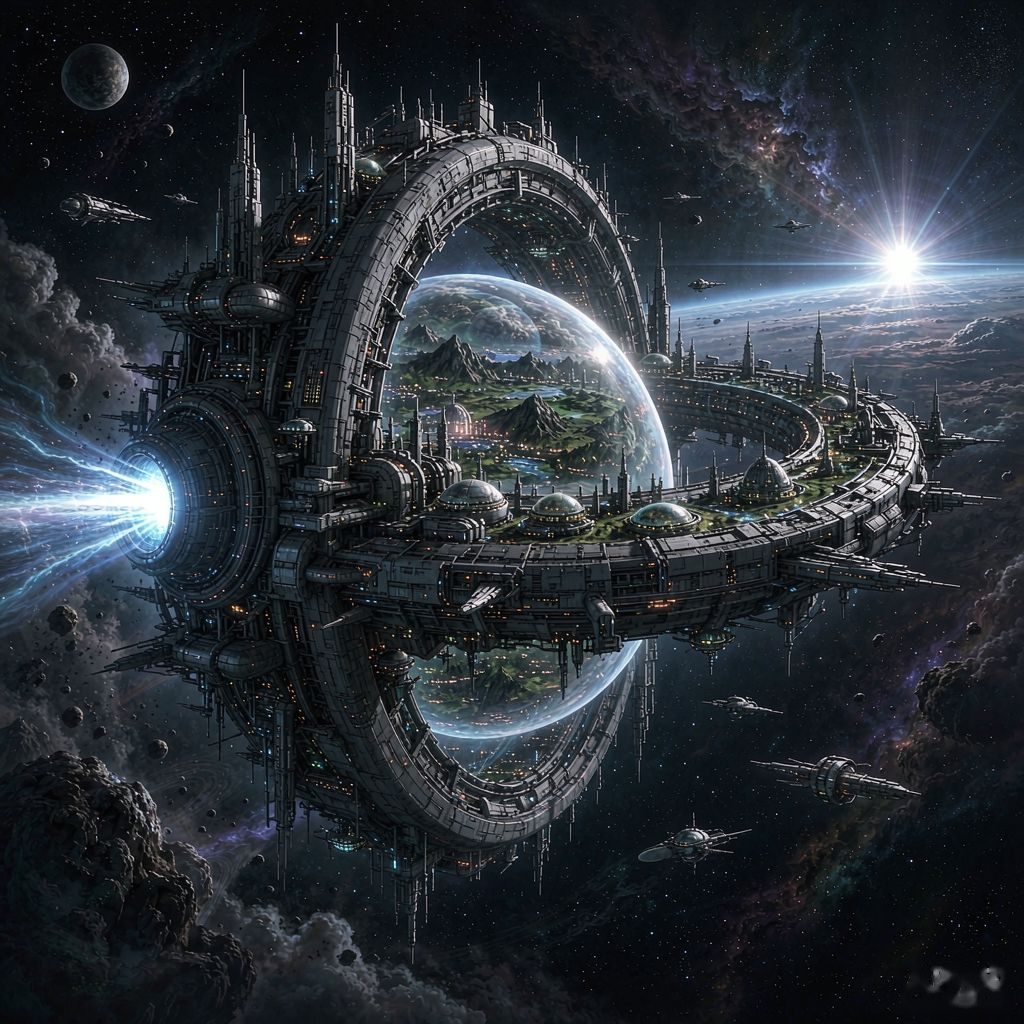
If light speed remains uncrossable, humanity's interstellar migration may ride a generation ship: a mobile space city kilometers long, carrying thousands at a few percent of light speed for centuries. Those who arrive will be descendants of those who departed — born, educated, and lived entirely aboard. The ship demands a perfect ecological loop and a society stable across generations. The question it tests is the same one asked by any sustainable future: can humanity build a world that sustains itself for centuries? Researching it makes life better on Earth, whatever the launch date.
Artemis crewed landings; ILRS basic configuration; Starship routine flight and orbital refueling demos.
Polar bases using lunar ice; Mars sample return completed; first crewed Mars mission preparations.
Permanent Mars research base; commercial asteroid mining; orbital factories and solar power satellites scale up.
Space cities with residents; deep-space fleets to the outer planets; interstellar probe programs begin.
"We do not look up at the stars — we look at humanity's own future." — SPACEWAN
